

During an online health information sharing session hosted by Makerere University under the Social Innovation in Health Initiative Community of Practice (SIHICOP), Mr. Emmanuel Sendaula, Clinical Epidemiologist & Monitoring and Evaluation Specialist at Reach Out Mbuya Community Health Initiative (ROM), shared insights on monitoring and evaluating community health innovations.
Speaking about ROM’s interventions, he noted:
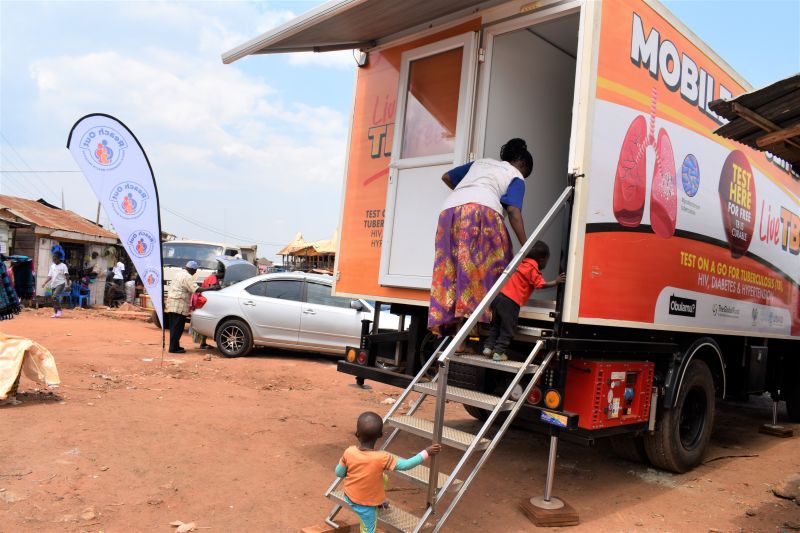
The mobile van is an innovation we started in 2015 because we understood that we are reaching communities that are very remote. We have set up satellite clinics in localities far from health facilities, and some are literally unreachable.
We rolled out this mobile van, one of the innovations we are very proud of. It moves several times a week to reach these areas, including landing sites and rural communities, bringing services closer to those who need them.
In measuring its impact, we look at the number of people reached, how many are linked to health facilities, and the geographical coverage.
We have designed tools that capture data in real time within the van. Through this, we have seen increased uptake, improved access to health services, and reduced gaps between facilities and communities.
Within the mobile van, we also have linkage systems where services provided are connected to health facilities for continued care.
Quality assurance is key, supported by a team of health workers, M&E specialists, mobilizers, and community structures who help track and manage impact.
Digital systems
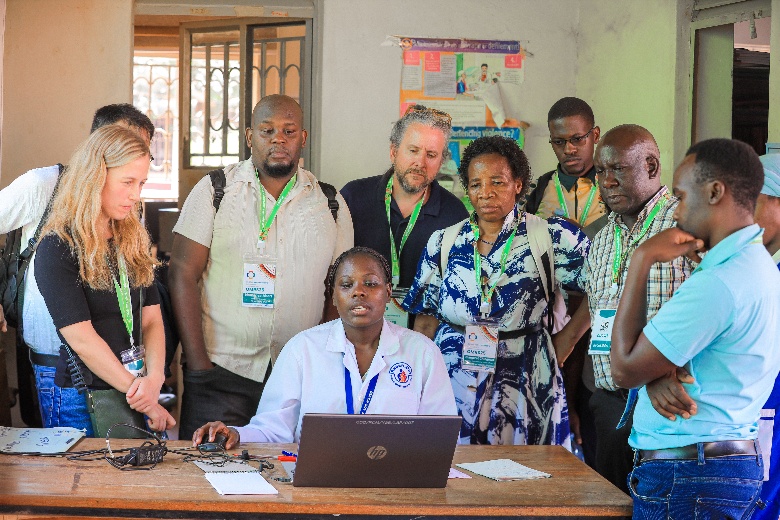
Moving to digital systems, ROM is among the institutions that rolled out a mobile community application now taken up by the Ministry of Health, the eHMIS mobile.
This application tracks outcomes for people living with HIV, including drugs given, viral load, services offered, and missed appointments.
We measure this through missed appointments, viral load tracking, and data completeness. Over time, the system has been improved to align with registers used at health facilities and is now part of the national community module. It has reduced reporting delays, improved follow-up, and minimized paperwork, making it easier for community workers to collect and use data in the field.
ROM has also played a critical role in rolling out other digital systems, including maternal and child health modules and mental health tracking tools, while continuing research to strengthen these systems.
On peer models, ROM has established extensive community structures across Kampala and Wakiso. These models reach specific groups, including adolescents, mothers, men, and the elderly. For the elderly, this is a unique approach where older persons support and monitor fellow elderly persons within their communities. They conduct visits, collect information, and share insights to improve care.
We have also used geographical information systems (GIS) to map populations and support decision-making. This includes mapping children, adolescents, and elderly persons in both rural areas and Kampala. This has helped identify hotspots, set up satellite clinics, and improve outreach efficiency. GIS has also supported surveillance during COVID-19 and Ebola by identifying areas that need intervention.
Lastly, on community sample collection, this is one of our recent innovations aimed at bridging gaps in service delivery. We collect samples directly from the community using approaches such as boda bodas and mobile outreach, then link them to health facilities. This has reduced turnaround time, improved testing completion, and strengthened care for people living with HIV.
Monitoring and evaluation must be integrated from the design stage of these innovations. We incorporate M&E from design through implementation and development. We also align our tools with national systems and ensure that different innovations are linked together, because no single innovation works in isolation.
Data collected is used to inform decisions, redesign interventions, and support learning and scaling. For smaller organizations, the most cost-effective approach is to use routine data. Start with what you have and build from there.