Use Social Media Responsibly: Women & Girls Tasked During 16 Days of Activism Commemoration

Women and girls have been urged to embrace responsible use of social media as a strategy to curb digital violence and protect themselves online.

The call was made on Tuesday during the International Human Rights Day celebrations, which marked the climax of the global 16 Days of Activism — a period dedicated to violence prevention, response, and care. The event, held in partnership with Reach Out Mbuya Community Health Initiative (ROM), Empowered At Dusk Women’s Association (EADWA), the African Women’s Development Fund, Makerere University, the Infectious Diseases Institute (IDI), WomanKind Worldwide, and others, began with a march led by the ROM Brass Band.

Ms Joweria Sadiq, a counsellor at Kawaala HCIV, encouraged girls to be intentional and cautious while using digital platforms, warning that irresponsible online activity has cost many Ugandans, including celebrities, their careers and reputation.

“Social media is a powerful space to learn, grow and showcase your abilities. Use it to shape opportunities that move you closer to the future you want. Never allow reckless online behaviour to take away doors you could have opened,” she advised.

Ms Joweria Sadiq speaking to the participants at Kawempe Division Chambers.

About 49% of Ugandan women experience online violence, according to the United Nations in Uganda.

Grace Kabayaga, Executive Director at EADWA, emphasized that although digital platforms offer immense opportunities, they have also become spaces of harassment and abuse for women and girls.

Grace Kabayaga addressing the participants

“We invite community leaders, partners, youth, educators and activists to join this movement. Let us use our platforms to challenge online abuse, support survivors and promote a culture of respect and dignity in all digital spaces,” she said.

Harriet Nakuya, the Structural Prevention Officer at ROM stressed the importance of supporting referral pathways and ensuring survivors of violence access legal and psychosocial assistance without intimidation.

“During these 16 Days of Activism, we reached 20 schools and conducted sensitization sessions on digital violence in schools and tertiary institutions. We also scaled up case identification, held community barazas, debates, and discussions, and engaged local, religious, and cultural leaders to raise awareness and promote safer online spaces for children and youth,” she said.
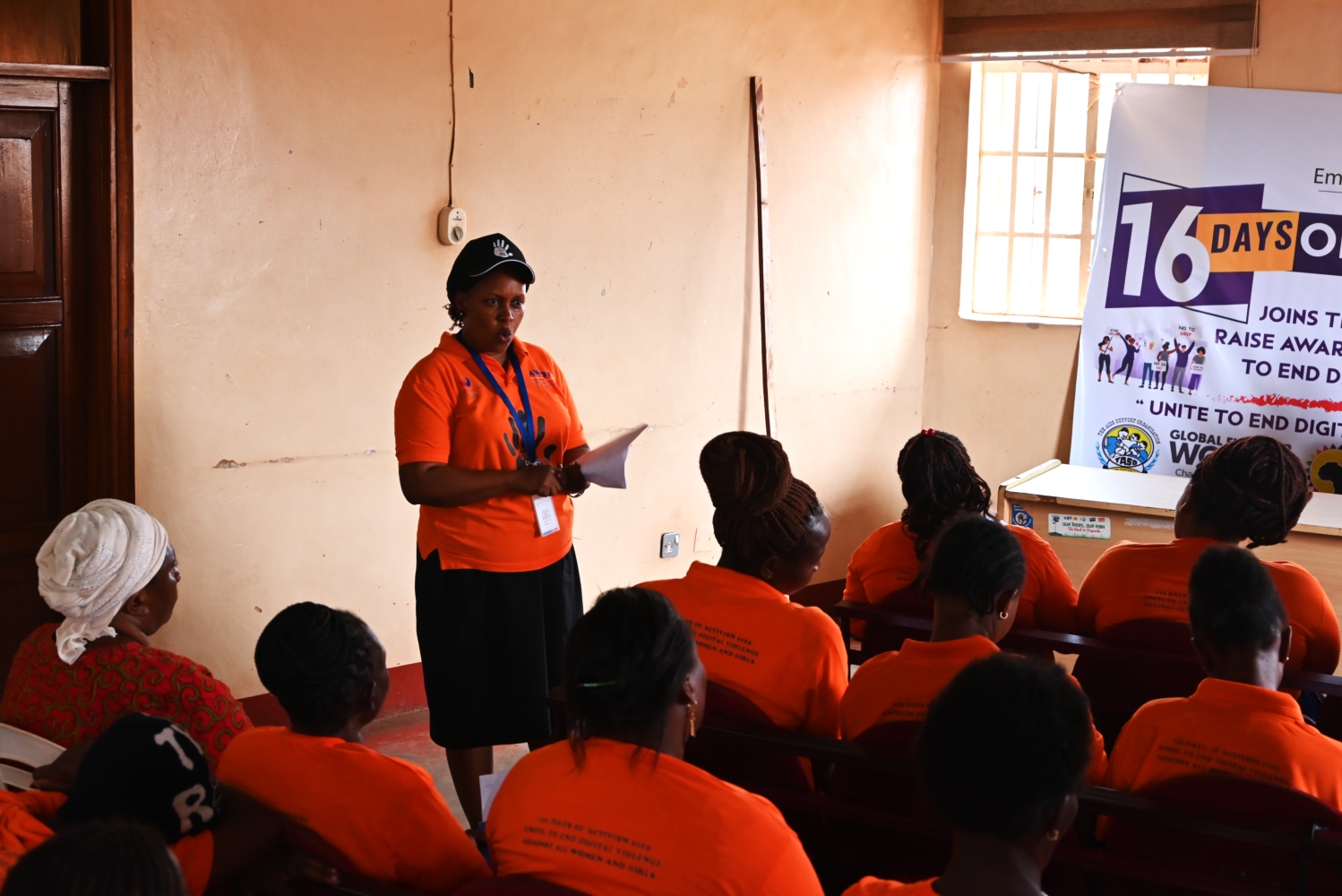
Harriet Nakuya addressing participants at KCCA Kawempe Division Chambers

Nankya Ruth, Woman Council representative for Bwaise II, reminded participants that awareness of one’s rights is key to empowerment.

“Everyone is born with fundamental rights, but many people do not know they exist. Understanding these rights is the first step to true empowerment,” she said.
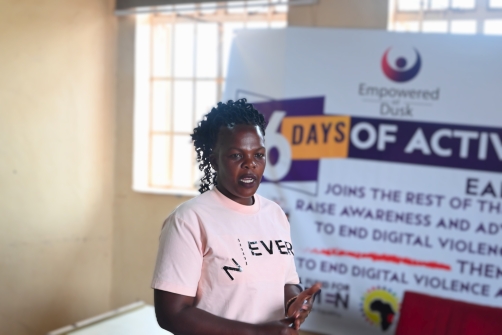
Nankya Ruth addressing the participants at the KCCA Kawempe Division Chambers

Speaking on behalf of the Division Mayor, Nakyobe Silvia noted that irresponsible parenting fuels digital violence, as children imitate what adults post online. Adding,

Nakyobe addressing the participants at the KCCA Kawempe Division Chambers

“Do not stay silent about violence. Violence response initiatives should also be aimed at engaging community leaders, because they are often heard by the people they lead.

Some of the participants

Voices from Participants

Paul Nakibinge, one of the participants, highlighted relationship dynamics as a trigger for violence.

“Infidelity and polygamous relationships are major drivers of violence. Problems often begin when a man gains more resources and uses them to search for another woman,” he shared.

Willy Wakayamba, a member of the Kawempe Human Rights Committee, urged young people to develop self-confidence and avoid consuming or sharing harmful content online.

“If something would upset you, don’t post it. Also, many cartoons carry inappropriate content and that’s how children learn negative behaviour,” he cautioned.


Participants wore themed T-shirts, reinforcing the collective call to end violence and promote safer communities.


The ROM Brass Band made mobilisation of community members easier

Share your comments below. Please read our commenting guidelines before posting. If you have a concern about a comment, report it here.

Leave a Comment

Your email address will not be published. Required fields are marked *

Share Now

Supporting Grandmothers to Combat HIV in Luweero

Share Now

Related News

We use cookies to personalise content and ads, to provide social media features and to analyse our traffic. We also share information about your use of our site with our social media, advertising and analytics partners. View more
Cookies settings
Accept
Privacy & Cookie policy
Privacy & Cookies policy
Cookie name Active

Who we are

Our website address is: https://www.reachoutmbuya.org.

What personal data we collect and why we collect it

Comments

When visitors leave comments on the site we collect the data shown in the comments form, and also the visitor’s IP address and browser user agent string to help spam detection. An anonymized string created from your email address (also called a hash) may be provided to the Gravatar service to see if you are using it. The Gravatar service privacy policy is available here: https://automattic.com/privacy/. After approval of your comment, your profile picture is visible to the public in the context of your comment.

Media

If you upload images to the website, you should avoid uploading images with embedded location data (EXIF GPS) included. Visitors to the website can download and extract any location data from images on the website.

Contact forms

Cookies

If you leave a comment on our site you may opt-in to saving your name, email address and website in cookies. These are for your convenience so that you do not have to fill in your details again when you leave another comment. These cookies will last for one year. If you visit our login page, we will set a temporary cookie to determine if your browser accepts cookies. This cookie contains no personal data and is discarded when you close your browser. When you log in, we will also set up several cookies to save your login information and your screen display choices. Login cookies last for two days, and screen options cookies last for a year. If you select "Remember Me", your login will persist for two weeks. If you log out of your account, the login cookies will be removed. If you edit or publish an article, an additional cookie will be saved in your browser. This cookie includes no personal data and simply indicates the post ID of the article you just edited. It expires after 1 day.

Embedded content from other websites

Articles on this site may include embedded content (e.g. videos, images, articles, etc.). Embedded content from other websites behaves in the exact same way as if the visitor has visited the other website. These websites may collect data about you, use cookies, embed additional third-party tracking, and monitor your interaction with that embedded content, including tracking your interaction with the embedded content if you have an account and are logged in to that website.

Analytics

Who we share your data with

How long we retain your data

If you leave a comment, the comment and its metadata are retained indefinitely. This is so we can recognize and approve any follow-up comments automatically instead of holding them in a moderation queue. For users that register on our website (if any), we also store the personal information they provide in their user profile. All users can see, edit, or delete their personal information at any time (except they cannot change their username). Website administrators can also see and edit that information.

What rights you have over your data

If you have an account on this site, or have left comments, you can request to receive an exported file of the personal data we hold about you, including any data you have provided to us. You can also request that we erase any personal data we hold about you. This does not include any data we are obliged to keep for administrative, legal, or security purposes.

Where we send your data

Visitor comments may be checked through an automated spam detection service.

Your contact information

Additional information

How we protect your data

What data breach procedures we have in place

What third parties we receive data from

What automated decision making and/or profiling we do with user data

Industry regulatory disclosure requirements

Save settings
Cookies settings